Spaniel Natural Game Trials
If you have a spaniel of exceptional natural ability, and have perfected him to its work in the field; if you have succeeded in attaining such perfection without in any way impairing his keenness, dash and pace .... your dog is a certain Field Trial winner, and I hope you will give him the chance of proving itself such. -H.W. Carlton, Spaniels their breaking for sport and field trials.
The history of spaniel trialing in New Zealand reflects more than eight decades of evolving sporting practice, selective breeding, and the enduring partnership between hunters and their dogs. Although informal working dog competitions existed earlier, the sport entered a new era of organisation and national identity in 1941 with the running of the first New Zealand Spaniel Championship Trial. This landmark event established the foundation for a structured competitive framework and signaled the beginning of a tradition that would shape the development of working spaniels across the country.Throughout the mid twentieth century, spaniel trialing in New Zealand drew heavily from British field sport conventions. Dogs were expected to demonstrate steadiness, controlled quartering, and reliable game finding ability—qualities that defined the classic flushing spaniel and they were expected to retrieve across/through water. These early decades were characterised by steady refinement rather than dramatic change, as breeders and handlers worked within established expectations to produce dogs capable of consistent, disciplined performance.By the late 1980s, however, the sport stood on the threshold of transformation. Shifts in game availability, hunting practices, and handler expectations created a growing appetite for trials that more closely reflected real hunting conditions. This momentum culminated in the introduction of Spaniel Natural Game (SNG) trialing in the early 1990s—a development that fundamentally reshaped the competitive landscape. SNG trials placed renewed emphasis on natural game sense, drive, and adaptability, rewarding dogs that could combine instinctive hunting ability with the traditional virtues of obedience and control. A simple water test would only be conducted when a spaniel gained its FCH title.The arrival of SNG trialing had a profound influence on breeding priorities. Kennels and sires capable of producing dogs with intensity, resilience, and genuine field intelligence quickly rose to prominence. These bloodlines now underpin many of the Spaniels competing at the highest levels in New Zealand. As a result, the modern competitive Spaniel is the product of both historical tradition and three decades of targeted selection shaped by the demands of natural game work.
Spaniel Natural Game Trial Overview
Spaniel Natural Game Trials is where the true essence of a spaniel is revealed. It’s a serious, disciplined test of instinct, drive, and partnership — and it’s here that the most exceptional dogs prove their worth. For anyone passionate about spaniels and the work they were born to do, this is where excellence is earned, not assumed.
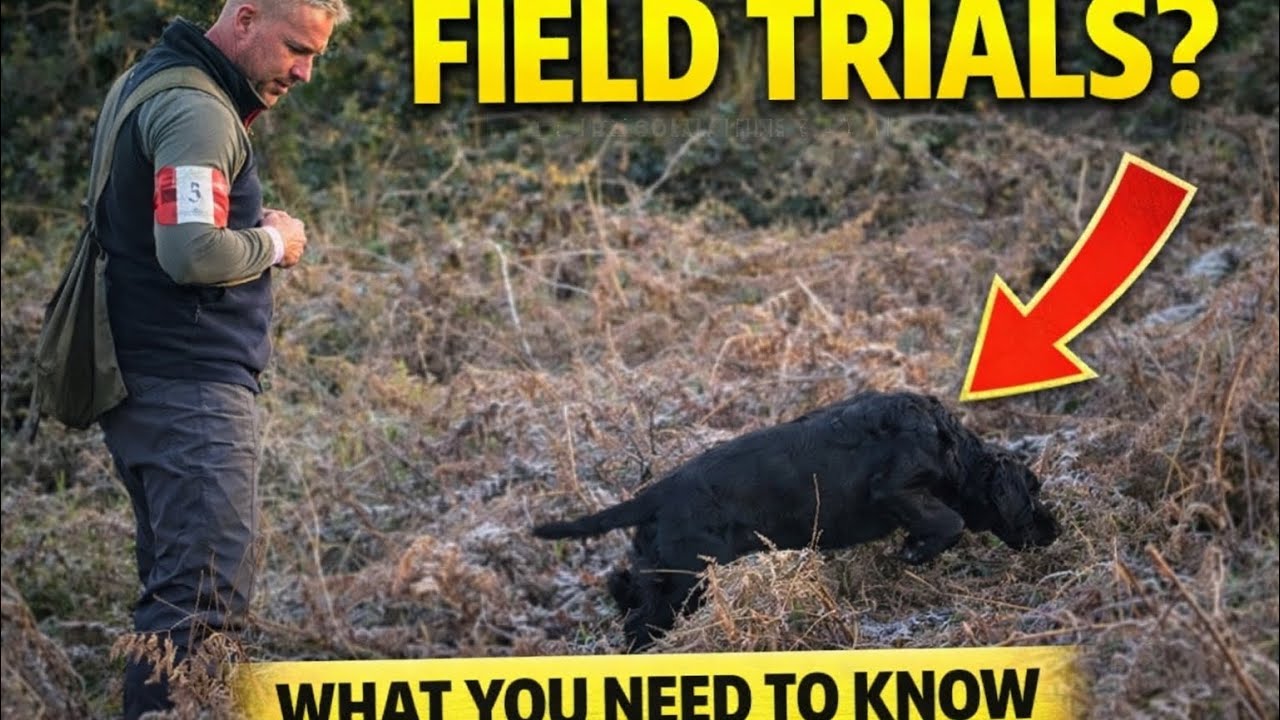
A Spaniel Natural Game Trial is a judged rough shoot designed to closely mirror real hunting conditions, offering handlers a competitive platform to showcase their dog's working abilities. The quarry typically includes rabbits or pheasants.
At the start of the trial, each dog is expected to hunt the ground ahead of its handler in a methodical zig-zag pattern known as quartering. Throughout the hunt, the dog must remain within shotgun range—approximately 20 metres—to ensure control and effectiveness.
The primary goal is for the dog to locate and flush game from cover, allowing it to be shot by designated “Guns” who shoot on behalf of the handler. Crucially, the dog must demonstrate steadiness—remaining still at the flush and shot without chasing the game. Once the game is shot, the dog is sent on command to retrieve and deliver it directly to the handler’s hand.
Natural Game Trials are judged on the dog’s hunting skill, game-finding ability, steadiness, control, and courage when working through dense cover. Dogs work in pairs, each on separate ground with its own Judge, accompanied by a Steward. This format emphasizes the dog’s partnership with its handler and its performance under authentic field conditions.
For full regulations and further details, visit the NZ Gundog Trials Association website.
A Spaniel Natural Game Trial is a judged rough shoot designed to closely mirror real hunting conditions, offering handlers a competitive platform to showcase their dog's working abilities. The quarry typically includes rabbits or pheasants.
At the start of the trial, each dog is expected to hunt the ground ahead of its handler in a methodical zig-zag pattern known as quartering. Throughout the hunt, the dog must remain within shotgun range—approximately 20 metres—to ensure control and effectiveness.
The primary goal is for the dog to locate and flush game from cover, allowing it to be shot by designated “Guns” who shoot on behalf of the handler. Crucially, the dog must demonstrate steadiness—remaining still at the flush and shot without chasing the game. Once the game is shot, the dog is sent on command to retrieve and deliver it directly to the handler’s hand.
Natural Game Trials are judged on the dog’s hunting skill, game-finding ability, steadiness, control, and courage when working through dense cover. Dogs work in pairs, each on separate ground with its own Judge, accompanied by a Steward. This format emphasizes the dog’s partnership with its handler and its performance under authentic field conditions.
For full regulations and further details, visit the NZ Gundog Trials Association website.
What a Spaniel Natural Game Trial looks like
Video can’t be displayed